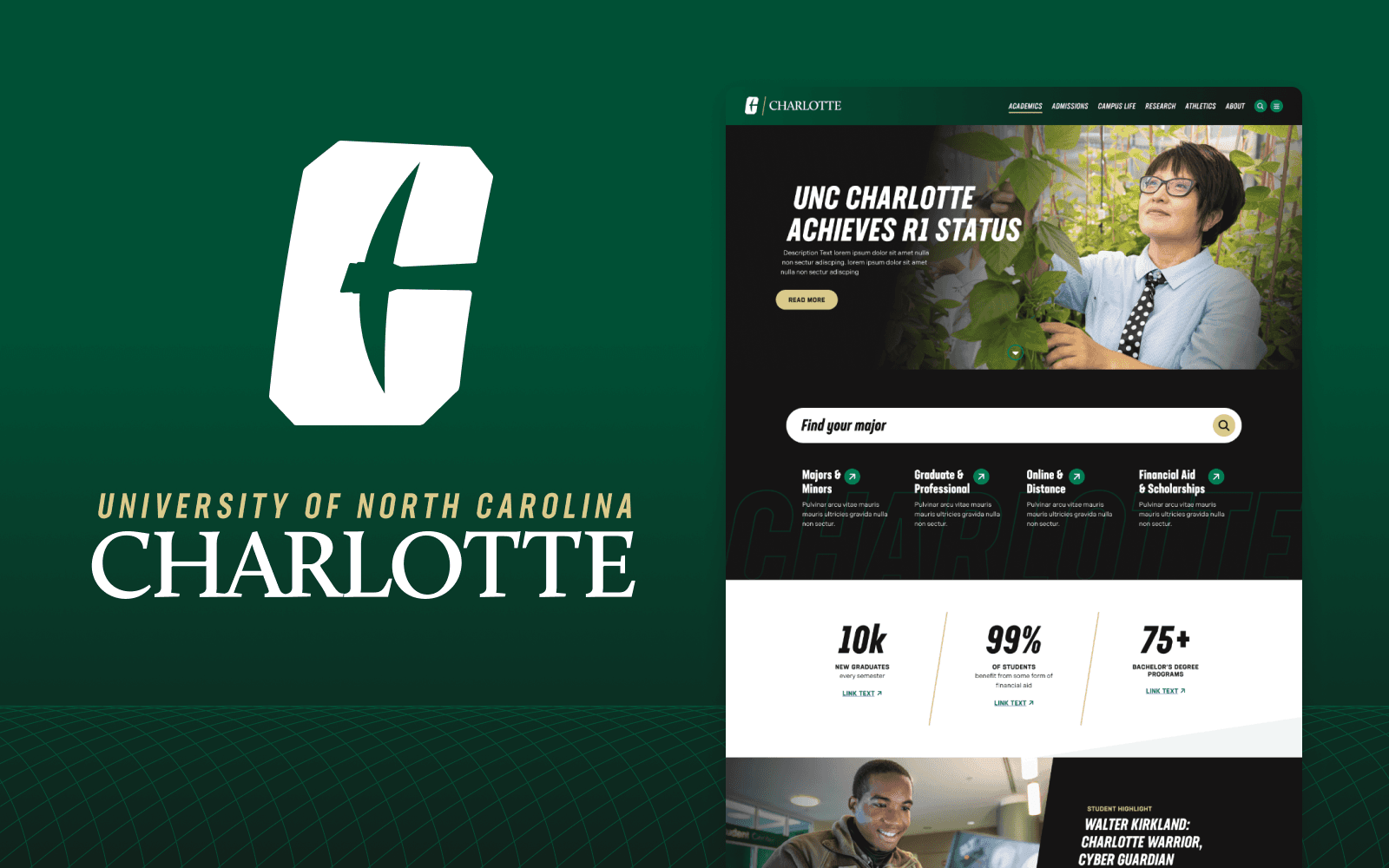
Role
Product Designer:
Visual identity
Design system
Content strategy for Graduate Programs
Platforms
Wordpress (desktop & mobile)
Audience
Prospective Students
Overview
Charlotte came to us with a monumental collection of websites, comprising over 400 subdomains. Through deep collaboration with hundreds of stakeholders, we painstakingly crafted and implemented a plan to help them wrangle their content, get comms teams aligned, and position their brand to students as a bold university poised for a massive impact. I led the visual design and component structure effort, building a flexible system that allows content creators in any college, school, or department to match their new brand while staying true to their content.
The Problem
The website was sprawling and disconnected, hundreds of content creators across hundreds of subdomains.
Their brand voice was outdated, and no longer reflected the energy and growth of the University.
The Solution
A set of flexible components, designed to offer maximum flexibility while keeping the brand identity cohesive.
A web standards guide, to give content creators an accessible digital reference when building out their web content.
Moodboards
We began the process with a deep discovery, including spectrum polls and moodboards, to help us get aligned on the visual direction and how that reprents us as a University. The ultimate decision was a direction that felt dynamic, accessible, and a little bit STEM.
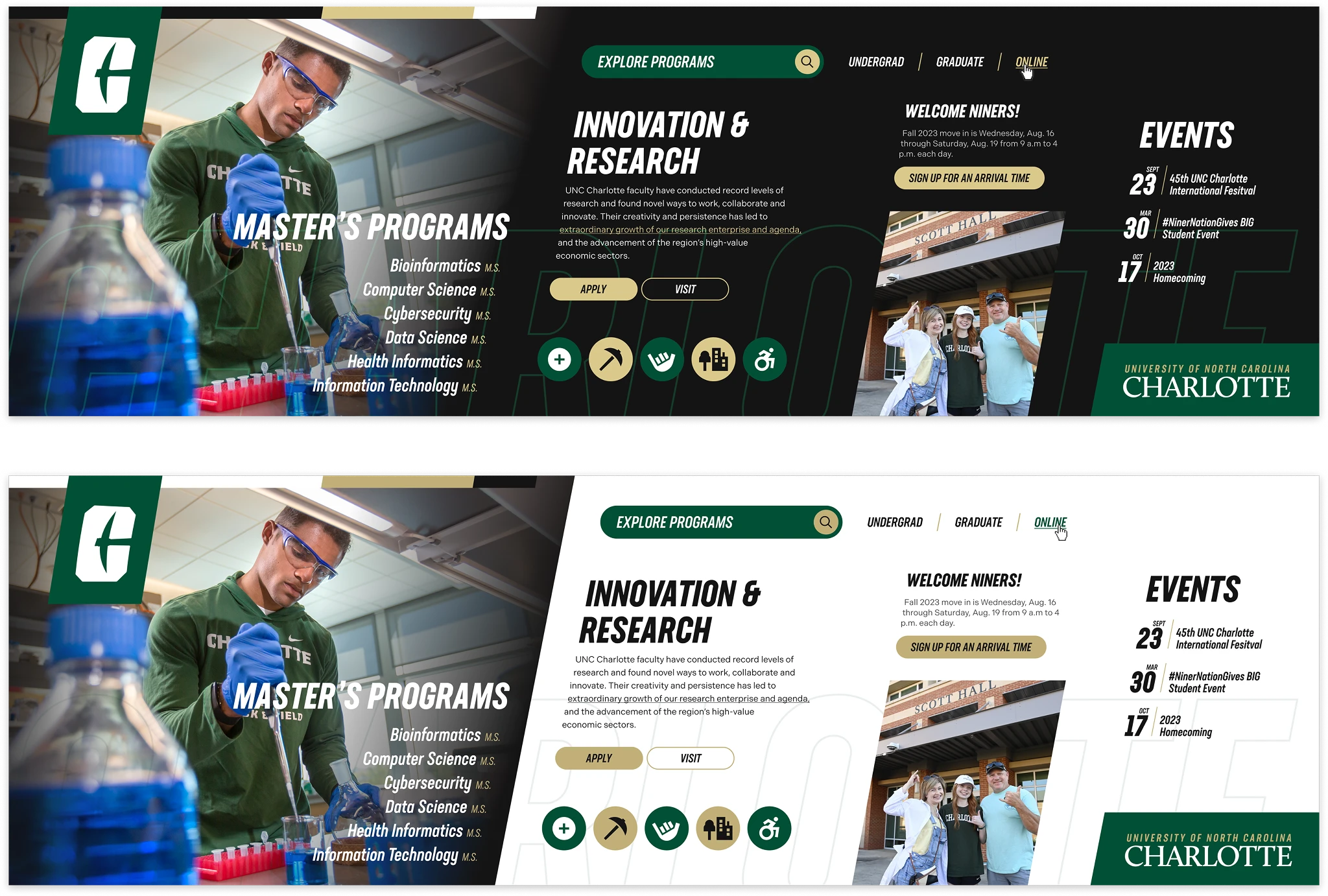
The chosen visual direction: Accesible STEM.
Extending the visual language
With the visual direction established, the next step was to apply it to components. We selected the top most-used components from the existing system, unifying and streamlining each one to keep them feeling familiar but much more fleixible. This resulted in a component system that college communicators can easily use to build out the pages on their subdomain while keeping everything on-brand and usable for students.
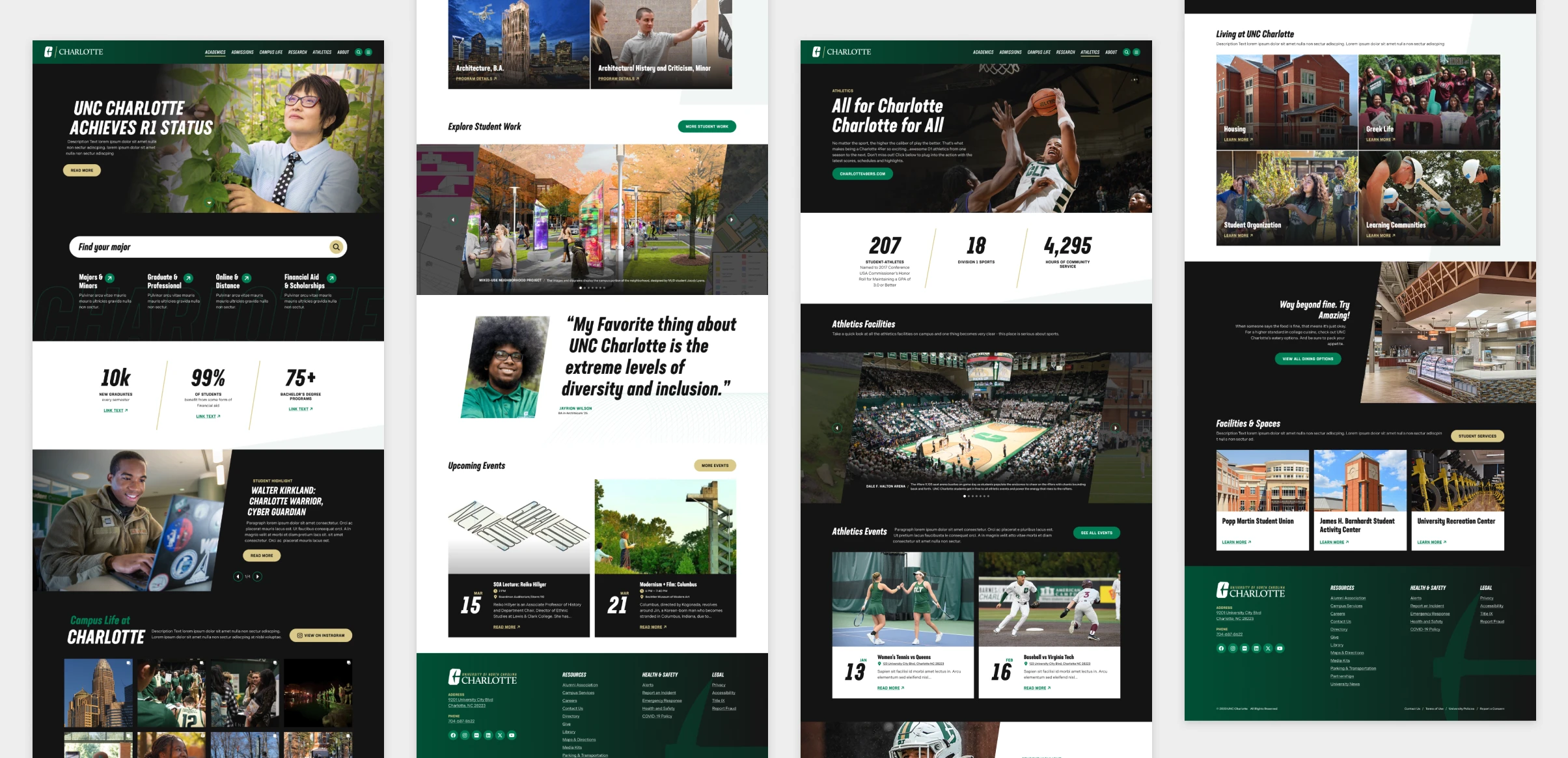
A collection of the pages showing the design system in-use. From left-to-right: The UNC Charlotte Homepage, Dept. of Architecture landing page, Athletics landing page, and Campus Life.

A look at the entire component system at a glance. (The point is, it's huge.)
Stakeholder workshops for grad programs
Once the design system was implemented, the next phase was to help college communicators understand how best to use it. We held stakeholder workshops with program leaders for nearly 30 individual graduate programs. In each session, we dove deep into what makes their program valuable to students, what content they currently had, and what we could easily source. We then translated that into page layouts and content strategy that helped each group communicate their strengths and value quickly, while celebrating their successes and uniquities.
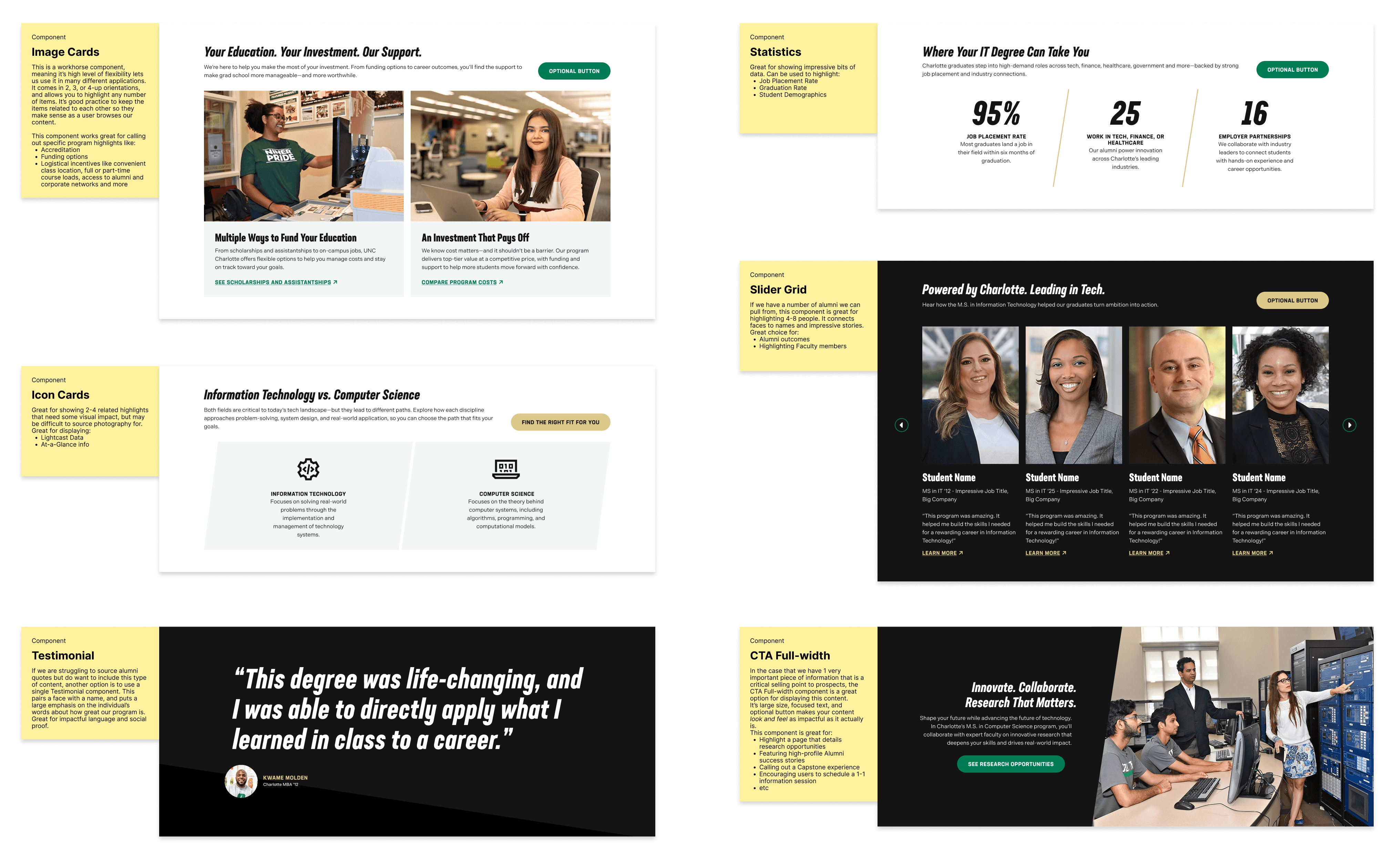
A sample of some components with notes on how to use them effectively. This helped college communicators understand how to best display their various types of content using the new design system.
A digital reference guide
A big question the folks at Charlotte had was "How do we maintain these standards after the project is over?" Our solution was a live Web Creator Guide: a living site of its own that details out each component, page type, and best practices for using them. It's become an excellent internal reference tool, educating new web creators, and serving as a quick reminder for the power users.
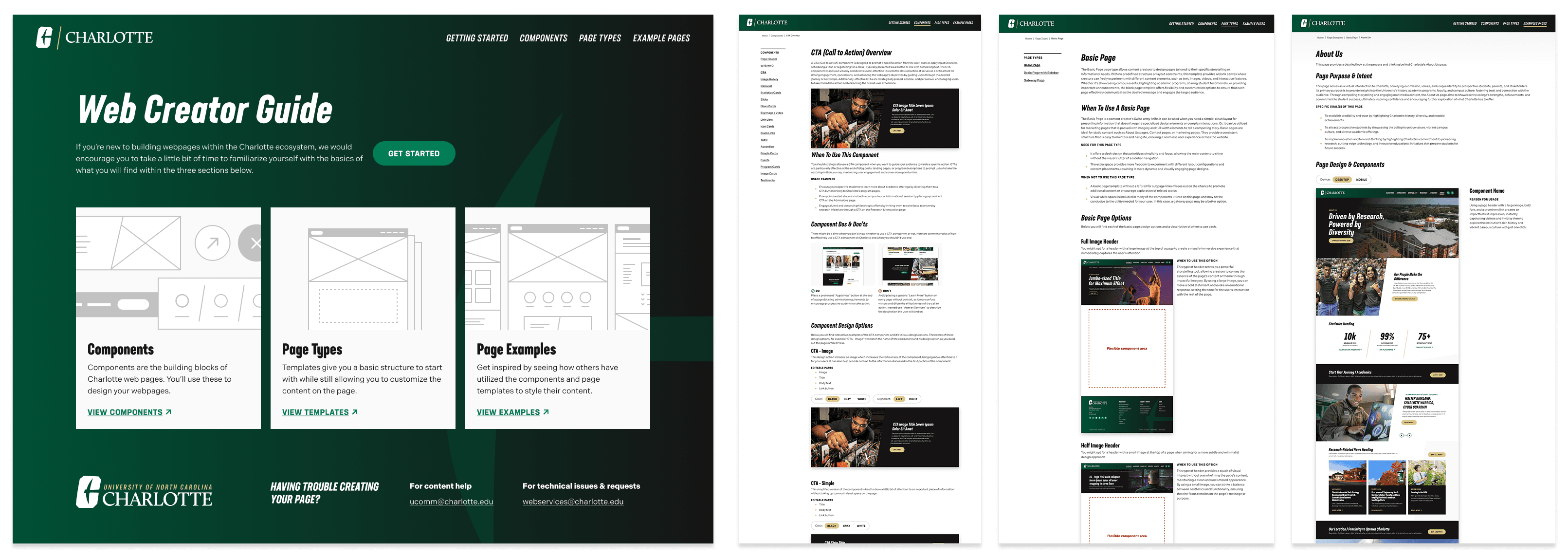
An early look at the Web Creator Guide

Some typographic design nuggets from the process, there are MANY more but I'm limiting myself to 3 here.
Outcome
The Savas Labs and UNC Charlotte partnership continues to this day. We have since addressed numerous addtional properties: from colleges, schools, and departments, as well as student and faculty support intitiatives. I am deeply thankful for the trust they placed (and continue to place) in me and the team, and for the opportunity to help grow Charlotte's brand and engage new students.
The work detailed here is simply a record of my part of the Charlotte's website redesign effort. The above work was performed primarily by myself while part of the team at Savas Labs, and could not have been possible without efforts and feedback from my dedicated colleagues and countless incredible folks at The University of North Carolina at Charlotte.